


Short answer: Social media marketing for small business is not about being on every platform. It is about picking one or two places where your buyers already spend time, posting proof of real work on a rhythm you can keep, and turning attention into enquiries (calls, bookings and messages) instead of chasing follower counts.
Social media marketing for small business starts with free foundations: complete profiles, a clear handle and a few strong posts that show what you do. Spend paid money only behind posts that already worked, and judge any provider by named deliverables, not by a follower promise. This guide covers platforms, management, content, ads, services, costs, rules and a 90-day plan.
Table of Contents
Key Takeaways
- Buy attention you can measure. A good plan for social media marketing for small business names the platforms, posts per week and enquiries each month should bring.
- Pick platforms by where your buyers are, not by trend.
- In social media marketing for small business, post proof before promotion: short video of real work earns reach that a sales post rarely does.
- Pay only to amplify what already worked organically.
- Judge social media marketing for small business over months, not days, and measure calls, bookings and messages, not likes.
How We Prepared This Guide
This guide to social media marketing for small business combines survey data from Pew Research Center, vendor and agency data that we label as such, and FTC rules. We did not run client campaigns for it. Read our disclaimer and about page for how Henof works.
Social Media Marketing for Small Business: Choose Platforms by Where Your Buyers Spend Time
Small businesses lose the most time by trying to be everywhere, and a profile you cannot keep updated hurts more than none. Pew Research Center‘s November 2025 survey of 5,022 US adults found YouTube used by 84%, Facebook by 71%, Instagram by 50% and TikTok by 37%. Reach is not results, though.
SmartSites‘ own client data (mostly local and regional service clients, September 2025 to August 2026) found Facebook and Instagram send about 82% of organic social visits (Facebook 65.4%, Instagram 16.3%), yet their conversion index sits below YouTube’s: YouTube 0.97x the site average, Instagram 0.88x, Facebook 0.40x and TikTok 0.04x. Treat this as one agency’s client data, not a market average.
| Business type | Start with | Why it works | Watch out for |
|---|---|---|---|
| Local service (plumber, auto repair, home services) | Facebook, then Instagram | Customers check reviews and book locally | Measure calls, not reach |
| Visual product (food, fashion, decor) | Instagram, then TikTok | Photos and short video sell before a word is read | Reach now comes from non-followers |
| B2B (consultancy, agency, software) | LinkedIn, then YouTube | Founder-led posts build trust | Slow to start; needs real expertise |
| Ecommerce | Instagram and TikTok, then YouTube | Discovery feeds show products to new people | Clicks are cheap, sales are not |
Before you choose, search your own service on each platform. If competitors’ customers are asking questions there, that is where your buyers are. Social also works with search: a customer who finds you on social often Googles you before calling, so your website and your SEO services for small business should match what your profiles promise.
Social Media Management for Small Business
What is social media management? It is the system behind the posts: planning, creating, posting on a rhythm, replying to comments and messages, and checking each month what brought enquiries. Good social media management for small business is a calendar and a habit, not a talent.
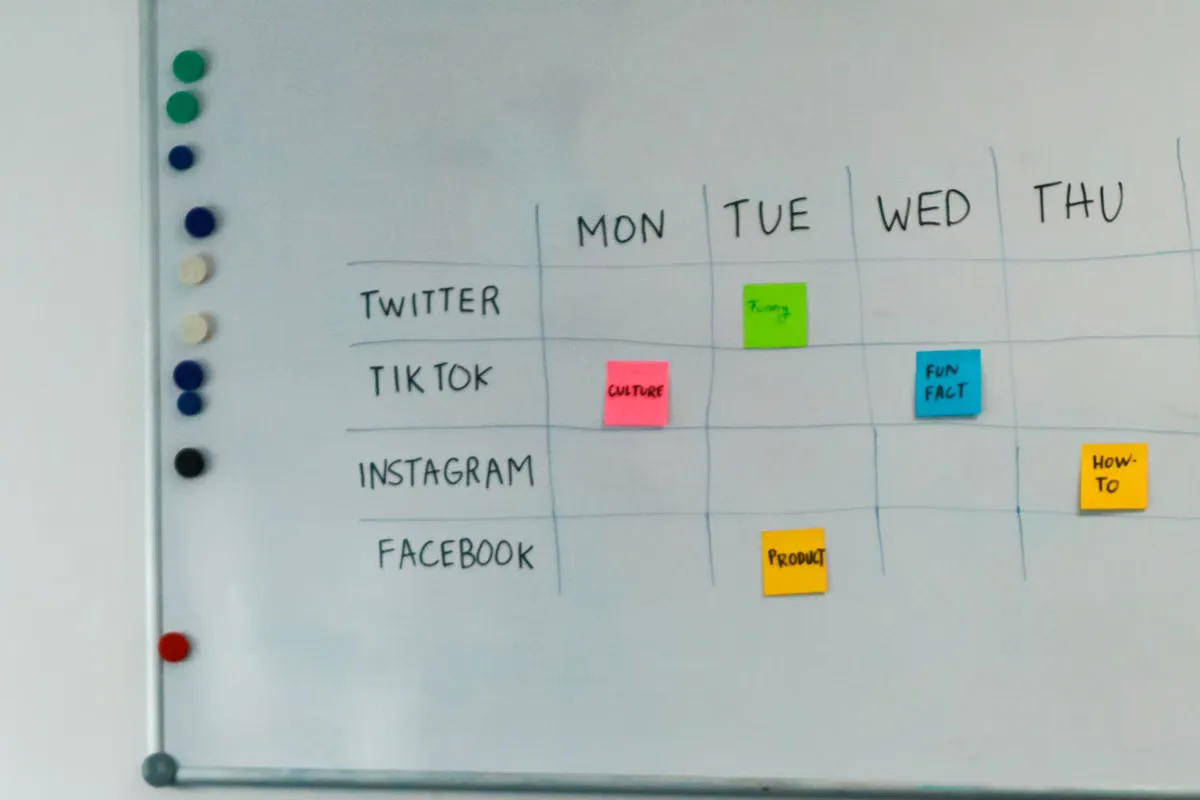
A lean rhythm for social media marketing for small business is one primary platform with three posts a week and one secondary platform with two, about 20 posts a month. Build each week around five pillars: Teach (answer a customer question), Prove (show real work), Demonstrate (show how it is done), Humanize (show the people) and Convert (a clear offer and a way to contact you).
The system behind social media marketing for small business fits many trades. A plumber can post one before-and-after job a week, which makes social media marketing for plumbers a low-competition corner because few plumbers post proof. Automotive social media marketing works the same way: an auto repair shop can film a 30-second repair explanation. A home-services firm can use social media management for home services the same way, rotating the pillars across Facebook and Instagram. SME social media does not need a studio, only a phone, good light and a real job.
Keep a simple calendar, a folder of real job photos and a list of customer questions. Add a scheduling tool only when posting on time becomes the problem. For contractors and trades, see how digital marketing helps contractors win.
Social Media for Small Business: Content That Earns Reach
Social media for small business is won by content, not accounts. Recommendation feeds now show your posts to people who do not follow you, so a strong first two seconds can out-reach a much larger account. SmartSites found the top 1% of posts earn 83% of impressions.
Lead with proof in social media marketing for small business: a short video of a finished job, a customer explaining the result or a problem being fixed answers the question every stranger asks, can I trust this business? One honest video a week beats five stock photos.
Human-made content has an extra edge now. Sprout Social’s Q1 2026 Pulse Survey found 28% of consumers most want brands to stop posting unlabeled AI-generated content, and 35% said they trust social media less than a year ago, as reported in Sprout Social’s analysis. Label AI help and have a person check it.
Social media marketing trends 2026 point to short video, recommendation feeds and proof over polish. Watch trends, but only use formats that help you show real work. Our guides to social media engagement, social media intelligence and influencer marketing channels go deeper.
Social Media Advertising for Small Business
In social media advertising for small business, paid social should amplify what already worked, not rescue what did not. Pick your best organic post of the last month and put a small budget behind it, aimed at people near you who match your buyers.
Organic vs paid social media
Organic vs paid social media is a sequence, not a choice. Organic builds proof and trust over time, while paid reaches more of the right people quickly but stops when you stop paying. Run organic every week and paid only behind winners.
Keep the test small and local: one post, one audience, one week. Measure cost per call, booking or message, not cost per like, and stop ads that bring likes but no enquiries after two weeks.
Social Media Marketing Services for Small Businesses
Social media marketing services for small businesses are what you buy when social media marketing for small business outgrows your spare time. A proper service names the platforms, posts per week, who replies to comments and messages, what is reported monthly and who owns the accounts and content.
Progression Agency, a New York agency, publishes three packages: Presence at $850 a month (1 platform, 8 posts), Growth at $1,850 (2 platforms, 16 posts, community management and a small paid budget) and Program at $3,400 (2 to 3 platforms, video and full paid management), per its own guide. These are one agency’s prices, not a market rate.
Social Media Agency for Small Businesses: Agency vs Freelancer vs DIY
There are three ways to buy a social media agency for small businesses or similar help: DIY, a freelancer or an agency. DIY costs the least money and the most time, around five to ten hours a week for two platforms. A freelancer costs less than an agency, and an agency gives you a team and cover when someone is away.
For social media marketing for small business, a hybrid is often best: hire help for a defined piece, such as a month of content or a profile rebuild, and keep daily replies in-house. Ask what will be delivered, who you will speak to, for a sample report and two references, who owns the accounts, and the contract terms. For B2B social media marketing, look for founder-led posts and proof of expertise, usually on LinkedIn. Compare firms with our top digital marketing agencies.
Walk away from guaranteed followers and bought engagement. Followers can be bought, enquiries cannot, and fake engagement teaches the platform to show your posts to the wrong people.
Rules and Risks to Know
Rules matter in social media marketing for small business because mistakes can cost trust, accounts and money.
- Disclosures: if you pay for endorsements or give free products for posts, the connection must be clearly disclosed under FTC rules.
- Reviews: never buy or fake reviews, because the FTC’s consumer reviews rule targets them.
- Music: business accounts are often limited to commercial music libraries, so check each platform’s rules before using trending audio.
- Customer content: ask permission before reposting customer photos or videos.
- Account security: use two-factor authentication, keep admin access in your own name and never give a vendor your only login.
- Negative comments: reply calmly and move complex issues to a private message.
- AI content: label AI help where platforms require it and check accuracy.
Read the FTC’s guidance on social media disclosures and its reviews and testimonials rule.
The 90-Day Plan for Social Media Marketing for Small Business

This table for social media marketing for small business assumes a typical small business with no regular rhythm, incomplete profiles and no reporting. If you hire help, hold them to it.
| Weeks | Focus | Done when |
|---|---|---|
| 1 to 2 | Profiles, handle and foundations: same handle everywhere, complete bios, first 6 proof-led posts | Profiles complete; 6 posts live |
| 3 to 4 | Rhythm and pillars: 3 posts a week primary, 2 secondary; first short video; reply to every comment | Rhythm running 2 weeks; first video live |
| 5 to 6 | Content that proves: before-and-after, customer result, FAQ answers; first boost behind the best post | 3 proof posts live; cost per enquiry recorded |
| 7 to 8 | Local and B2B as fits: location posts, review requests, founder post | Review requests sent; weakest format dropped |
| 9 to 12 | Scale what worked; second boost; first monthly report; decide DIY or hire | Report shows reach, enquiries and cost |
The plan is front-loaded with foundations, because content built on an incomplete profile is wasted. If your profiles are sound, move faster on video.
What Social Media Marketing Costs for a Small Business in 2026
Costs for social media marketing for small business range from free to several thousand dollars a month, depending on who does the work.
| Option | Typical price (USA) | Usually includes | Best for |
|---|---|---|---|
| DIY, free tools | $0 a month | Your time (5 to 10 hours a week) and a phone camera | New business with more time than money |
| DIY plus tool | $10 to $150 a month | Scheduling and basic analytics | Business that already posts on time |
| Freelancer | Priced by scope; get a written quote | Posts per week, replies, monthly report | One expert, directly |
| Progression Presence | $850 a month | 1 platform, 8 posts | Single-platform start |
| Progression Growth | $1,850 a month | 2 platforms, 16 posts, community management, small paid budget | Two platforms with replies handled |
| Progression Program | $3,400 a month | 2 to 3 platforms, video, full paid management | Competitive, video-led markets |
A paid ads budget sits on top of these prices, so start with a small test behind your best post. The lowest price usually buys the least work, and Progression’s prices are one agency’s own figures, not quotes or a market rate.
How to Measure Whether Social Media Marketing for Small Business Is Working
The measure that matters is enquiries: calls, bookings and messages from social, counted the same way every month. Reach, likes and followers are leading signs, not results.
Each month, record posts published, reach, enquiries per post and cost per enquiry for any paid test. Ask customers how they found you, and track clicks to your contact page. Steady visibility is one of the benefits of social media for small businesses, but visibility alone is not a result. SmartSites’ data shows the median site gets only about 2% of sessions from social, while the top quarter gets 9% or more the gap is a system, not luck. Judge over months, and drop the formats that bring attention but no enquiries.
Social Media Marketing for Small Business: Final Verdict
The best social media marketing for small business is not the biggest or the cheapest. Choose one or two platforms where buyers are, post proof on a rhythm you can keep, pay only behind winners and measure enquiries.
For the wider picture, read our guide to digital marketing for small business and our guide to SEO services for small business, and browse our Digital Marketing category for the next step.
Frequently Asked Questions
What is a social media handle?
Your handle is your @username on a platform, the name people tag and search for. Keep it the same everywhere, short, and as close to your business name as the platform allows.
What is social media management?
Social media management is the system behind the posts: planning, creating, posting on a rhythm, replying to comments and messages, and reporting each month. For a small business it usually means one primary platform, a few posts a week and a monthly check on enquiries.
How much does social media marketing cost for a small business?
Doing it yourself costs time, roughly 5 to 10 hours a week for two platforms. Progression Agency publishes $850, $1,850 and $3,400 a month for its three packages, which are its own prices, not a market rate. Get a written quote for platforms, posts per week and reporting before you compare.
How long does social media marketing take to work?
There is no fixed time and nobody can promise one. Progression Agency suggests judging on inquiries and sales after 3 to 6 months and deciding after 12. Judge a provider by delivered work and enquiries, not follower counts.
Is social media marketing worth it for a small business?
It can be when your customers use the platforms you choose. The benefits of social media marketing for small businesses include steady visibility, proof of real work and enquiries without paying per click, but it works best with a complete profile and a website that turns visitors into calls.
Which social media platform is best for a small business?
It depends on your buyers. Local service businesses often start with Facebook then Instagram, visual product businesses with Instagram and TikTok, and B2B firms with LinkedIn. Search your own service on each platform to see where customers ask questions.
How often should a small business post?
A workable minimum is three posts a week on your main platform and two on a second one. Consistency matters more than volume, so choose a rhythm you can keep.
Should I hire a social media agency for a small business?
Hire one when you have budget but no time, or when your organic posts already work and you need help scaling. Ask for named deliverables, a sample report, two references and clear ownership of your accounts.
Sources Used
- Pew Research Center: Americans’ Social Media Use 2025
- FTC: Disclosures 101 for social media influencers
- FTC: Consumer reviews and testimonials rule Q&A
- SmartSites: Social Media Marketing Strategy
- Sprout Social: Building Trust Through Social Media
- Progression Agency: Small Business Social Media Marketing
- AdManage: Social Media Marketing for Small Business
- BrandMentions: Social Marketing for Small Businesses
