

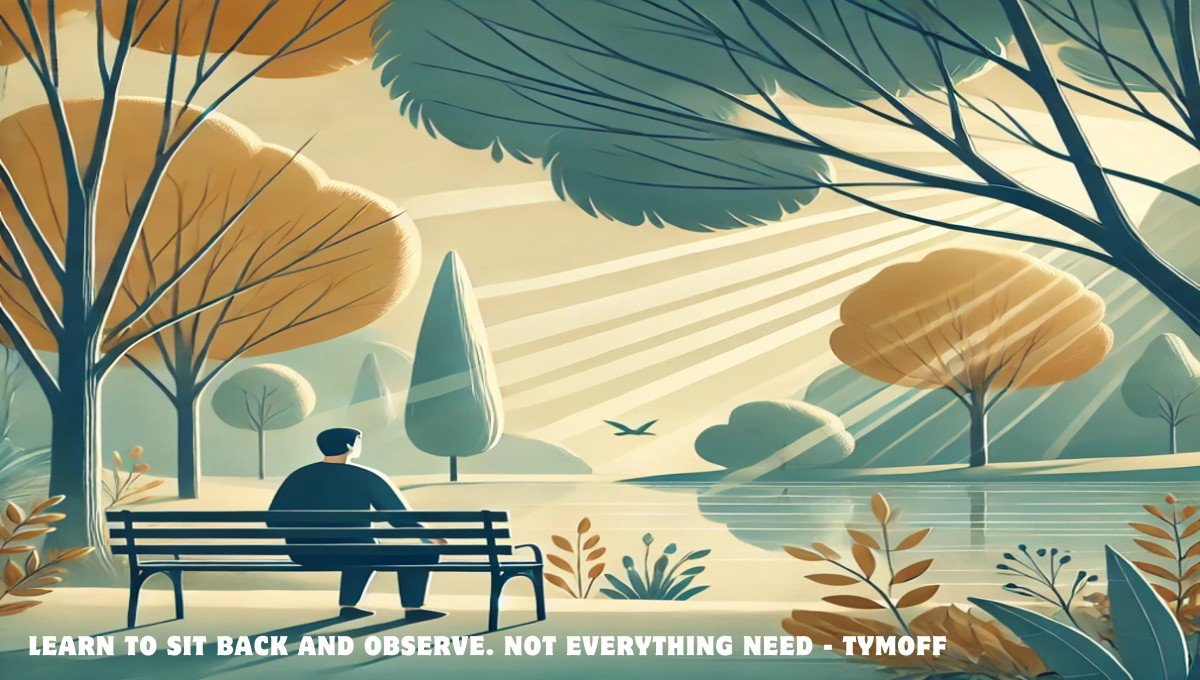
In today’s fast-paced world, people often feel pressured to act immediately on every piece of information or situation they encounter. However, there is immense value in taking a step back and observing without reacting impulsively. This perspective is well-captured in the phrase, “learn to sit back and observe. not everything need – tymoff” which encourages embracing patience, mindfulness, and reflective observation in our daily lives.
Table of Contents
Understanding the Essence of “learn to sit back and observe. not everything need – tymoff”
The phrase emphasizes the importance of resisting the urge to intervene in every situation. Often, in our quest to be proactive, we feel compelled to react to events, people, and emotions instantly. However, this inclination can sometimes lead to misjudgments, misunderstandings, and undue stress. By learning to observe without reacting, we give ourselves the space to fully understand the situation, to process it internally, and to respond more thoughtfully if needed.
Why Observation Is a Powerful Tool
Observation of “learn to sit back and observe. not everything need – tymoff,” when practiced mindfully, enables us to see things from a broader perspective. It allows us to:
- Gain Clarity: When we observe without reacting, we remove ourselves from the center of the situation. This detachment provides a clear view, free from personal biases, where we can assess the facts as they are.
- Build Patience and Resilience: By choosing to observe rather than react, we foster patience within ourselves. Patience allows us to cope with uncertainties without feeling overwhelmed and builds resilience against hasty emotions.
- Enhance Emotional Intelligence: Observing without acting helps us understand the emotions and motivations behind people’s actions. This enhances our empathy and ability to respond appropriately, making us more emotionally intelligent individuals.
- Promote Inner Peace: Constantly reacting to every little thing can lead to mental exhaustion. Sitting back helps to calm our minds, reduces stress, and brings a sense of inner peace that is essential for well-being.
The Balance Between Observation and Action
“learn to sit back and observe. not everything need – tymoff,”While sitting back and observing is beneficial, it is important to know when to act. Not every situation requires immediate intervention, but some do. For example, standing up for someone being mistreated or making decisions that impact our lives requires us to take action. The key is to balance observation with a well-timed response. In doing so, we achieve what psychologists call “response flexibility,” or the ability to pause and consider the best course of action rather than simply reacting.
Practicing the Art of Sitting Back and Observing
Developing this skill takes practice and patience, but the benefits are well worth the effort. Here are some practical steps to start:
- Pause Before Reacting: The next time you feel the urge to jump into a conversation, resolve a conflict, or correct someone, pause. Take a few deep breaths and focus on understanding the situation from all angles.
- Practice Mindfulness: Mindfulness exercises, such as meditation or deep-breathing techniques, help cultivate a sense of awareness and control over our impulses. With practice, you will find yourself naturally observing before reacting.
- Journal Your Observations: Writing down your observations at the end of the day can be a valuable way to process experiences without reacting impulsively. It enables self-reflection and helps identify patterns in your thoughts and responses.
- Challenge the Need for Control: Often, we react because we want to control outcomes. Remind yourself that not everything needs your input or control. Sometimes, the best action is to let things unfold naturally.
- Embrace Humility: Sitting back requires humility – a recognition that we may not have all the answers. This mindset shift allows us to step away from the need to intervene and trust in the process.
Benefits of “learn to sit back and observe. not everything need – tymoff”
Adopting this mindset brings numerous benefits to both personal and professional life:
- Improved Relationships: Observing before acting helps in understanding others better, leading to healthier and more balanced relationships.
- Enhanced Decision-Making: A measured approach results in thoughtful decision-making, which is crucial in professional environments.
- Personal Growth: The habit of observing and reflecting cultivates self-awareness, leading to continuous personal growth.
Embracing Tymoff’s Wisdom in Modern Life
“learn to sit back and observe. not everything need – tymoff” resonates especially well in our world of instant communication and constant connectivity. When every situation seems to demand an immediate reaction, learning to pause and observe is a refreshing counterbalance. Embracing this approach enables us to cultivate deeper understanding, patience, and peace in our lives. In time, you’ll find that by acting less, you actually accomplish more, with fewer regrets and richer insights.
FAQs About “learn to sit back and observe. not everything need – tymoff”
1. Why is it beneficial to observe without acting?
Observing without reacting helps gain clarity, build patience, and promote inner peace. It allows us to process situations better and respond more thoughtfully when necessary.
2. How can I practice observing without reacting?
Start by pausing before reacting, practicing mindfulness, journaling your observations, challenging your need for control, and embracing humility.
3. Is it always good to sit back and observe?
While it is beneficial in many situations, some circumstances require immediate action. The key is to find a balance and act when necessary.
By integrating these principles into your life, you can create a more thoughtful, balanced approach to personal and professional interactions.
