

Short answer: In the SparkTraffic vs SerpSEO comparison, the two are not the same kind of tool, and neither is a classic SEO suite. SparkTraffic sells automated website visits, often called bot traffic. SerpSEO is described by most reviews as a CTR service that sends clicks from Google search results to your page.
Both try to influence traffic signals instead of earning them, and neither can promise leads, sales or lasting rankings. For sustainable growth, use neither as your main strategy. If you only want to test server load or a demo dashboard, SparkTraffic fits that narrow use better.
Key Takeaways
- SparkTraffic vs SerpSEO is a comparison of automated visits against search-and-click CTR services, not two SEO suites.
- Older articles describing SerpSEO as a keyword research or rank-tracking suite are not supported by current sources.
- Google’s spam policies prohibit machine-generated traffic, and Google does not endorse selling traffic or clicks.
- We found no independent, controlled study proving lasting ranking gains from either tool.
- Real growth is measured in qualified leads and revenue, not in sessions.
Table of Contents
How We Researched This Comparison
We did not run campaigns with either tool, so we make no claims about ranking results or traffic numbers. This SparkTraffic vs SerpSEO comparison is based on each tool’s public positioning, third-party reviews, directory listings and Google’s published spam policies.
Where sources disagree, we say so. Pricing and features change, so confirm details on the official websites before buying. Read our disclaimer and about page to see how Henof works.
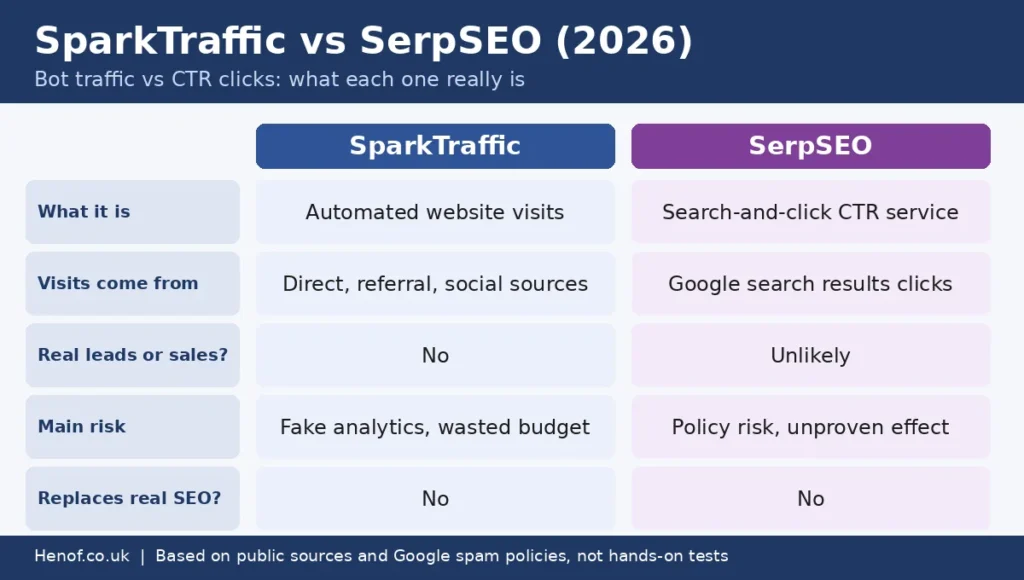
SparkTraffic vs SerpSEO: Quick Comparison Table
| Factor | SparkTraffic | SerpSEO |
| What it is | Website traffic generator (automated visits) | CTR / search-click service (per most reviews) |
| Where visits come from | Direct, referral, social and other sources you choose | Clicks that start from a Google search for your keyword |
| Who generates the visits | Automated sessions, marketed by the company as human-like | Reviews describe real human clickers, but sources are not fully consistent |
| Targeting options | Country, traffic source, session behaviour settings | Keyword and geo-based click campaigns |
| Pricing model | Plans based on visit volume | Sources disagree; check the official page |
| Best suited to | Load testing, demo dashboards | CTR experiments on test pages |
| Brings real leads or sales? | No | Unlikely |
| Main risks | Misleading analytics, wasted budget, ad-account issues | Policy risk, unstable and unproven ranking effect |
| Replaces real SEO work? | No | No |
What Is SparkTraffic?
SparkTraffic is a traffic generation service. You pick a plan, set options such as country, traffic source and session behaviour, and the platform sends automated visits to your URL. The company presents its sessions as human-like, designed to pass basic JavaScript and CAPTCHA checks.
Independent reviewers still classify it as a traffic bot and note they could not confirm whether it improves rankings. These visits are machine-driven. They can change numbers on a dashboard, but a bot does not buy, subscribe or fill in a form.
What Is SerpSEO?
SerpSEO is usually described as a CTR manipulation platform. Its model centres on a search for your keyword on Google followed by a click on your result. Some comparisons say it uses real human clickers, while others say it mixes automated and human interaction.
Because the descriptions differ, read how the provider describes its own method before trusting any claim. Earlier versions of this article, and some older blog posts, called SerpSEO a keyword research and rank-tracking toolkit. Current sources do not support that, so we corrected it.
SparkTraffic vs SerpSEO: Key Differences
Type of traffic
SparkTraffic focuses on volume of visits from many sources. SerpSEO focuses on one action: a search followed by a click. The SparkTraffic vs SerpSEO choice is therefore not like picking between two keyword tools.
Evidence of results
We found no independent controlled study showing that either tool produces lasting rankings. Many pages that rank for this topic are promotional or affiliate-style, so treat “proven results” claims carefully.
Whether and how Google uses click data in ranking is itself debated, and Google has not published a method that site owners can rely on.
Pricing transparency
SparkTraffic prices by visit volume. For SerpSEO, one 2026 roundup lists an entry plan, while another comparison says pricing is hard to find publicly. Always check current prices on the official website, and judge cost per real customer, not cost per visit or click.
Business value
Paid clicks and bot visits do not create customers. Real progress shows up in Search Console impressions, engaged sessions, leads and revenue.
Is SparkTraffic Safe? What Google’s Rules Say
Google’s spam policies classify machine-generated traffic, such as sending automated queries to Google without permission, as a violation. Directory and review sites also note that artificial click manipulation goes against Google’s guidelines and could in theory lead to penalties.
How often that happens in practice is unclear, so no one can honestly promise that these tools are “safe”. The main risks are:
- Misleading data: fake sessions make it harder to see what actually works.
- Ad risk: if you earn from ads, artificial traffic may conflict with ad network rules.
- Wasted budget: money spent on visitors who never buy is money not spent on content or links.
- Unstable effect: even where short-term movement is claimed, it is not backed by independent proof.
Why SparkTraffic vs SerpSEO Matters for Link Builders and Publishers
Traffic is one of the numbers clients and publishers look at when judging a site’s value. When that number includes bot visits or paid clicks, it stops reflecting real audience interest.
Decisions based on it, such as which sites to buy placements on, then become unreliable. This is analysis, not a claim from a campaign we ran. Relevance, editorial quality and genuine readership are safer signals than a session counter. For the bigger picture, see what SEO is and how it works.
How Can You Check Whether Traffic Is Real?
Whichever side of SparkTraffic vs SerpSEO you consider, check what actually arrives on your site:
- Compare Google Analytics sessions with Search Console clicks. A big, unexplained gap deserves investigation. GA4 filters known bots by default, but not every service is caught.
- Look at engagement and conversions, not just sessions. Real visitors scroll, click internal links and sometimes convert.
- Check geography and device patterns. Sudden bursts from places that do not match your audience are a warning sign.
- Review server logs for repeated hits from the same ranges or unusual user agents.
- Ask any traffic vendor for a clear, written description of how the traffic is generated.
SparkTraffic vs SerpSEO: Which One Should You Choose?
- Testing server capacity or a staging dashboard: SparkTraffic-type tools are closer to this use, ideally on a test site, not a client’s live property.
- Curious about CTR experiments: a click service like SerpSEO is the relevant category, but treat it as a risky experiment, not a growth plan.
- Want leads, sales or authority: skip both and use the safer options below.
What Are Safer Ways to Grow Traffic and CTR?
Instead of a SparkTraffic vs SerpSEO experiment, these steps build results you can measure and keep:
- Find pages with high impressions and low CTR in Search Console, then rewrite titles and meta descriptions to match search intent.
- Improve depth and structure of content so visitors stay and act. Our list of skills digital marketing strategists need and these digital marketing books are good starting points for learning the craft.
- Earn engagement from real audiences with social media engagement tactics and the right influencer marketing channels.
- Understand your audience better with social media intelligence.
- If you prefer outside help, review reputable options in this roundup of top digital marketing agencies.
- Browse more guides in our SEO category.
SparkTraffic vs SerpSEO: Final Verdict
The SparkTraffic vs SerpSEO question sits in the same risky corner of digital marketing: both tools try to influence signals rather than earn them. SparkTraffic is about visits, SerpSEO is about search clicks.
Neither replaces content quality, relevant links and a good user experience. For most businesses and bloggers in 2026, the better move is to invest in content, technical health and genuine outreach, and to treat any traffic tool as, at most, a limited and carefully monitored experiment.
Frequently Asked Questions
Is SparkTraffic the same as SerpSEO?
No. SparkTraffic generates automated website visits, while SerpSEO is generally described as a CTR service that sends clicks from Google search results.
Which is better in SparkTraffic vs SerpSEO?
Neither is a growth strategy. SparkTraffic suits load testing, SerpSEO suits CTR experiments on test pages, and real growth comes from content, links and a good user experience.
Does SparkTraffic bring real customers?
No. Its visits are automated, so they are not real buyers and should not be expected to produce leads or sales.
Is SerpSEO a keyword research tool?
Most current sources describe it as a CTR manipulation platform, not a keyword research or rank-tracking suite. Verify features on the official site.
Is SparkTraffic safe, and can these tools get my site penalized?
Google’s spam policies ban machine-generated traffic and automated queries. No one can promise a penalty or safety, but the risk is real, so avoid using them on important sites.
Which is cheaper, SparkTraffic or SerpSEO?
Sources disagree and pricing changes, so check both official pricing pages. Cost per real customer matters more than cost per visit or click.
What is a safer alternative for growing traffic?
Improve titles and meta descriptions for pages with low CTR, strengthen content and internal linking, and earn relevant backlinks through genuine outreach.
